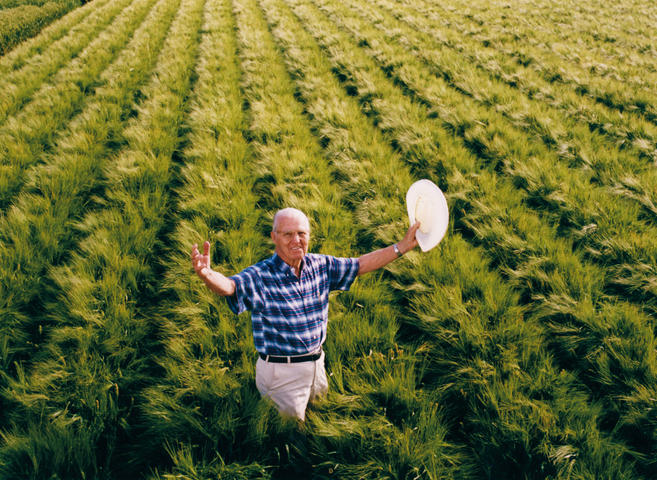
The Green Revolution was the result of a sequence of scientific breakthroughs and development activities that successfully fought hunger by increasing food production.
Basic ingredients of the first green revolution were: HYV seeds with superior genetics; use of chemicals - pesticides and fertilizers; and multiple cropping system supported by the use of modern farm machinery and proper irrigation system. During the period there was also expansion of farming areas. The First Green Revolution resulted in increase in production and changed the thinking of farmers. It had a marked impact on rural employment, resulted in increase in trade and the surplus rural incomes helped development of industries. Self-sufficiency in food grains affected the planning processes and gave a boost to the national self-confidence of then emerging democracies.
However, in a world that faces new challenges and is more sensitive to the sustainability concerns, it is important that a framework for the “Second Green Revolution” which aligns itself with the sustainable development principles is clearly articulated and fully comprehended to enable all the stakeholders to contribute towards the desired objectives in a synergetic collaboration. It has to cover the regions that got a miss in the first edition, for example the African Continent was unable to reap the benefits of the first green revolution. Similarly within countries in Asia, for example India, East and North East States were not privileged enough to benefit from the FGR.
We believe that through the efforts of our National Committees in Africa and support from other National Committees of ICID network we will be able to facilitate the Second Green Revolution as envisaged by the leaders in Africa, including Ex-UN Secretary General Mr Kofi Annan.
There are a number of misgivings about the SGR which need to be set straight. The Second Green Revolution has to be distinctly different from the first Green Revolution. The emphasis should be on small and marginal farmers. Attempt should be made not only to increase the production but also to sustain the productivity within the limits of natural resources. SGR should envisage integrated programmes taking care of all aspects of agriculture from soil characteristics, matching seeds, grains, conversion to food and its marketing after value addition.
As a network of Agriculture Water Management professionals, through our determined efforts, we will be able to make a substantial contribution towards sustainable rural development in Africa that ICID has envisioned in its new vision. Let us articulate how irrigation and drainage can make second green revolution a realty.
|