
| Home > Resources > Irrigation > Purpose of Irrigation > Forestry
|
||
FORESTRY |
||
The main goal of forestry is to create and implement systems that allow forests to continue a sustainable provision of environmental supplies and services. The challenge of forestry is to create systems that are socially accepted while sustaining the resource and any other resources that might be affected.
Forest ecosystems have come to be seen as the most important component of the biosphere, and forestry has emerged as a vital field of science, applied art, and technology.
In the 5th century monks established a plantation of Stone pine, for use as a source of fuel and food, in the then Byzantine Romagna on the Adriatic coast. Formal forestry practices were developed by the Visigoths in the 7thcentury when, faced with the ever increasing shortage of wood, they instituted a code concerned with the preservation of oak and pine forests.
The enactment and evolution of forestry laws and binding regulations occurred in most Western nations in the 20thcentury in response to growing conservation concerns and the increasing technological capacity of logging companies.
Today a strong body of research exists regarding the management of forest ecosystems and genetic improvement of tree species and varieties. Forestry also includes the development of better methods for the planting, protecting, thinning, controlled burning, felling, extracting, and processing of timber. One of the applications of modern forestry is reforestation, in which trees are planted and tended in a given area.
In topographically severe forested terrain, proper forestry is important for the prevention or minimization of serious soil erosion or even land slides. In areas with a high potential for landslides, forests can stabilize soils and prevent property damage or loss, human injury, or loss of life.
|
IRRIGATION
|
|
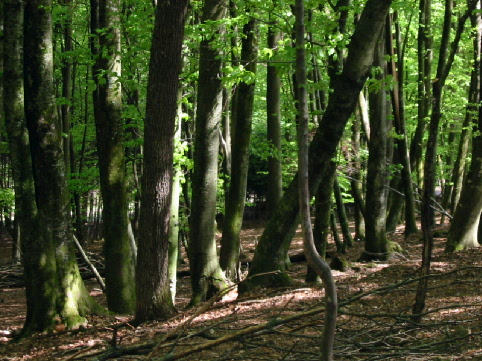 Forestry is the